
Pestokil · summer peak
Summer peak: wasps,
hornets &
flying insects
Nests grow larger every week. By August a wasp nest can hold thousands of wasps at peak aggression. Pestokil responds fast — even same day.
24/7
Available
Same day
Emergencies
100%
Certified
⚡ A nest in April is small · a nest in August can hold 10,000 wasps — act early
Call now: 0451 04 73 66Seasonal calendar
When is each insect most active?
Activity level by month. Use this to determine when prevention and intervention are most critical.
| Insect | Apr | May | Jun | Jul | Aug | Sep | Oct |
|---|---|---|---|---|---|---|---|
| Wasps | Low | Low | Medium | High | Peak | Peak | Low |
| Hornets | Low | Medium | High | Peak | Peak | High | Low |
| Flies | Low | Low | Medium | Peak | Peak | Medium | Low |
| Mosquitoes | — | Low | High | Peak | High | Low | — |
Summer pests
Which flying insects cause problems in summer?
Characteristics, warning signs and our approach for each species.
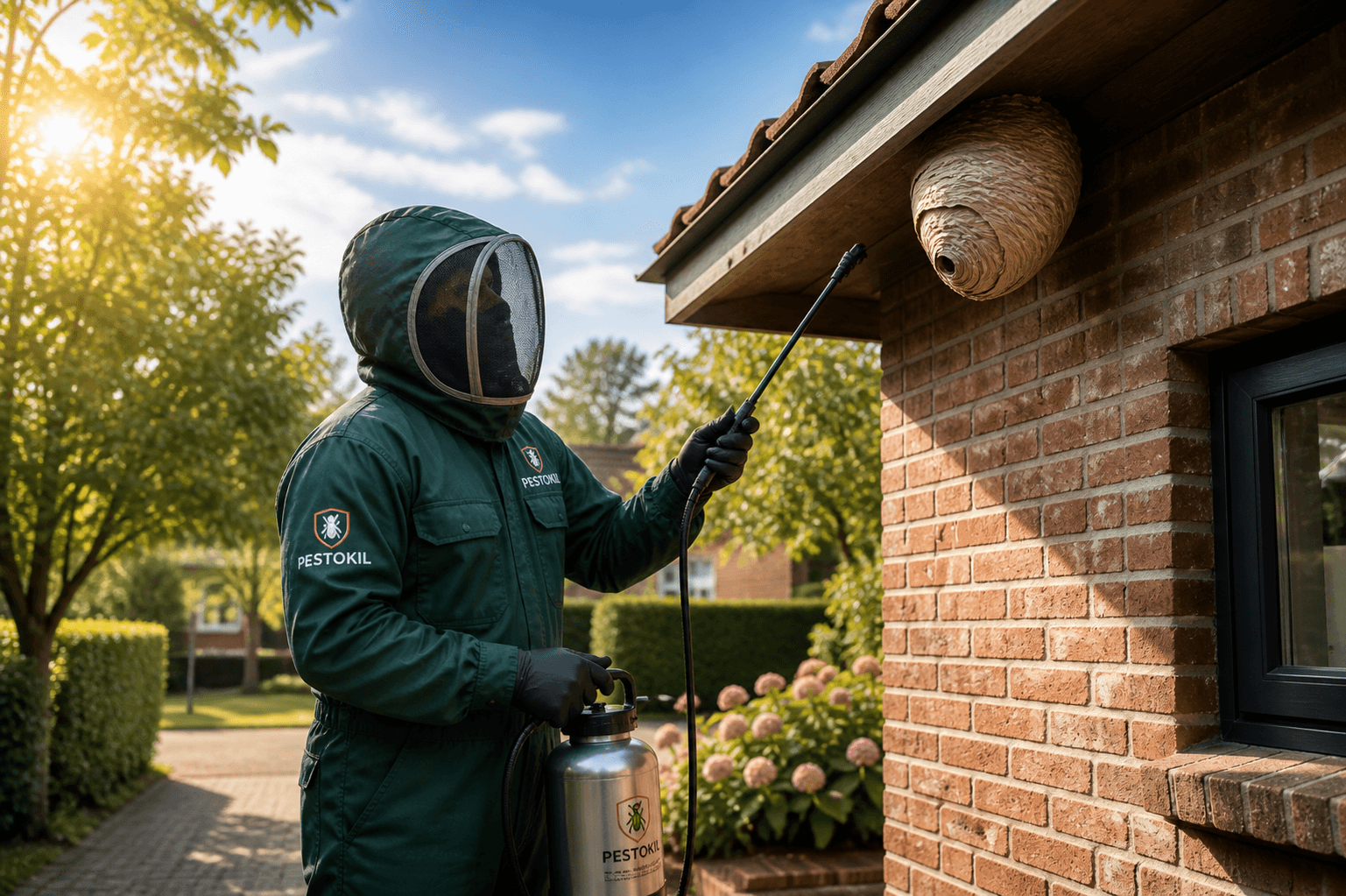
Wasps
Common wasps build nests in roof eaves, cavity walls and underground. A small nest in April can contain 5,000–10,000 individuals by August. They sting multiple times and are highly aggressive near the nest.
Warning signs
- High wasp activity around a specific spot
- Wasps flying in and out of a gap in a wall or gutter
- Papery grey nest visible in shed, storage room or attic
Our approach
- 1Locate and inspect the nest
- 2Treatment with professional insecticide in full protective gear
- 3Follow-up and prevention advice to avoid new nests
Hornets
Hornets are larger than wasps (3–4 cm) and their sting is more painful and dangerous. They are also active at night and build nests in hollow trees, barns and attics. One nest averages 400–700 individuals.
Warning signs
- Large insects (3–4 cm) around your garden or building, including at night
- Loud buzzing near an opening at night
- Large papery nest in a tree or building structure
Our approach
- 1Inspection at safe distance
- 2Night-time treatment when the nest is least active
- 3Full nest removal after treatment
Flies
Houseflies, blowflies and fruit flies increase rapidly in warm weather. They spread bacteria and are a serious hygiene risk in food businesses, hospitality and households. At high temperatures the population can double every few days.
Warning signs
- Many flies around bins, kitchen or terrace
- Flies returning constantly despite hygiene measures
- Larvae (maggots) in or around waste bins
Our approach
- 1Analysis of breeding sources and entry points
- 2Targeted treatment with insecticide or UV trapping systems
- 3Seasonal prevention and hygiene advice
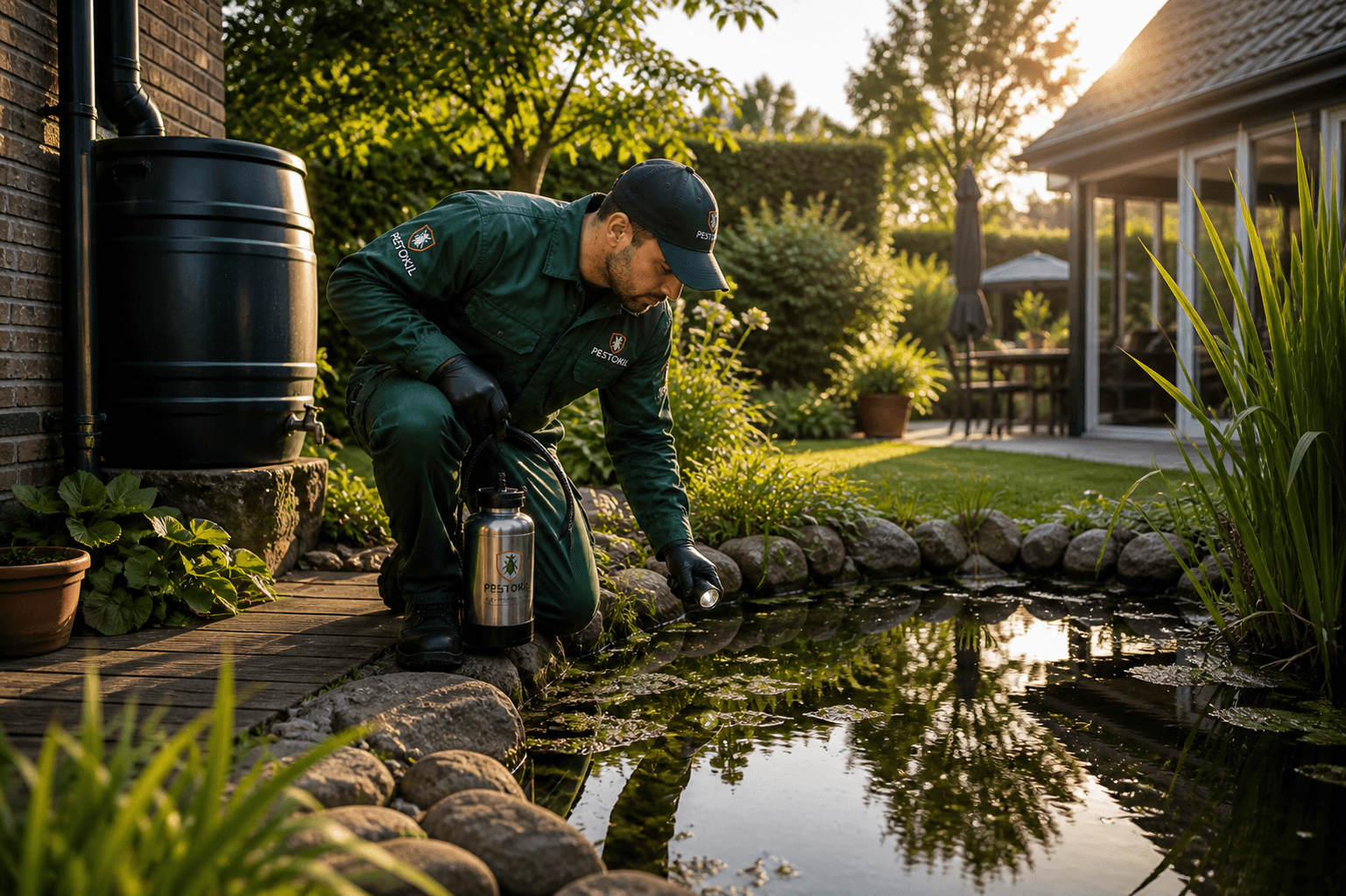
Mosquitoes
Mosquitoes breed in standing water and are most active in warm, humid conditions. They cause painful bites and disturb sleep. Near garden ponds, rainwater butts or damp cellars they can appear in very large numbers.
Warning signs
- Mosquitoes in the bedroom at night
- Standing water in garden (pond, watering can, drain covers)
- Red, itchy bite marks on residents or guests
Our approach
- 1Identify breeding sources (standing water)
- 2Larvicide treatment or drainage of breeding sites
- 3Prevention advice and optional repellent systems
Action needed?
Call us when you notice this
Recognise the signs and act quickly — earlier is always safer and cheaper.
- Wasps flying in and out of a gap in a wall, gutter or shed
- Large insects (hornets) around the building, including at night
- Fly infestation that keeps returning despite hygiene, or maggots in bins
- Mosquitoes disturbing sleep or repeated bites on residents
- A visible nest — even a small one grows fast
- Insect nuisance in a professional or hospitality environment
Prevention
How to prevent summer pests: practical tips
Good prevention reduces the chance of an infestation and makes any necessary treatment faster and cheaper.
Wasps & hornets
- ✓Seal gaps in roof eaves, cavity walls and facades before the season
- ✓Keep sweet drinks and food covered on the terrace
- ✓Remove ripe or fallen fruit from the garden promptly
- ✓Check sheds and attics in early spring for new nests
- ✓Avoid scented products in the garden when wasps are active
Flies & mosquitoes
- ✓Remove standing water: ponds, watering cans, drain covers, plant saucers
- ✓Keep bins sealed and remove waste regularly
- ✓Use UV fly traps or insect screens at doors and windows
- ✓Keep kitchen clean and remove overripe fruit quickly
- ✓Do not leave food or waste uncovered on terrace or in canteen
Reviews
What customers say about our wasp & insect control
“Wasp nest under the roof tiles — they came the same day and removed it safely. Very professional.”
James R. · Homeowner · Antwerp
July 2025
“Fly problem on the terrace in August. Pestokil installed a UV system and gave great hygiene advice. Works perfectly.”
Sarah M. · Restaurant owner · Brussels
August 2024
“Hornets in the garden shed. They arrived quickly, handled it professionally and explained everything clearly.”
David K. · Homeowner · Ghent
June 2025
1 / 2
Why Pestokil
Fast, safe help during summer peak
Summer pest problems need speed. We understand that a large wasp nest or fly infestation cannot wait.
FAQ
Frequently asked questions about summer pests
When are wasps most dangerous?
Wasps are most aggressive in August and September when nests reach their peak size — up to 10,000 individuals. In early summer (June–July) nests are smaller and easier to remove. Act early for a simpler, safer intervention.
Can I remove a wasp nest myself?
We strongly advise against it. Wasps sting multiple times and react instantly to vibration or light. Without protective equipment you risk dozens of stings at once. Our technicians use professional gear and certified products — safe for you, effective for the nest.
How quickly can you remove a wasp nest?
For emergencies we aim to attend the same day. During summer peak season we schedule interventions as fast as possible — call us directly for the earliest availability.
What if the nest is inside a wall, gutter or under the roof?
No problem. Our specialists have the right tools and techniques to safely treat nests in hard-to-reach locations — cavity walls, roof eaves, chimneys and more — without damaging your property.
Will the nest come back next year?
Wasps rarely return to a treated nest. We always give prevention advice: seal openings and avoid sweet attractants. This minimises the chance of a new nest forming.
What can I do about a fly infestation in summer?
A combination of hygiene measures (no open food, regular waste removal), UV fly traps and professional treatment gives the best results. Contact us for advice tailored to your situation.
Are the treatments safe for children and pets?
Yes. We use certified products that are safe after application. Our technician will always give you clear instructions about any waiting periods after treatment.
Wasps, hornets or insects near you?
Don't wait until the nest grows bigger. Pestokil responds fast — even same day.
Active across Belgium · Antwerp · Brussels · Ghent · Leuven · Mechelen